
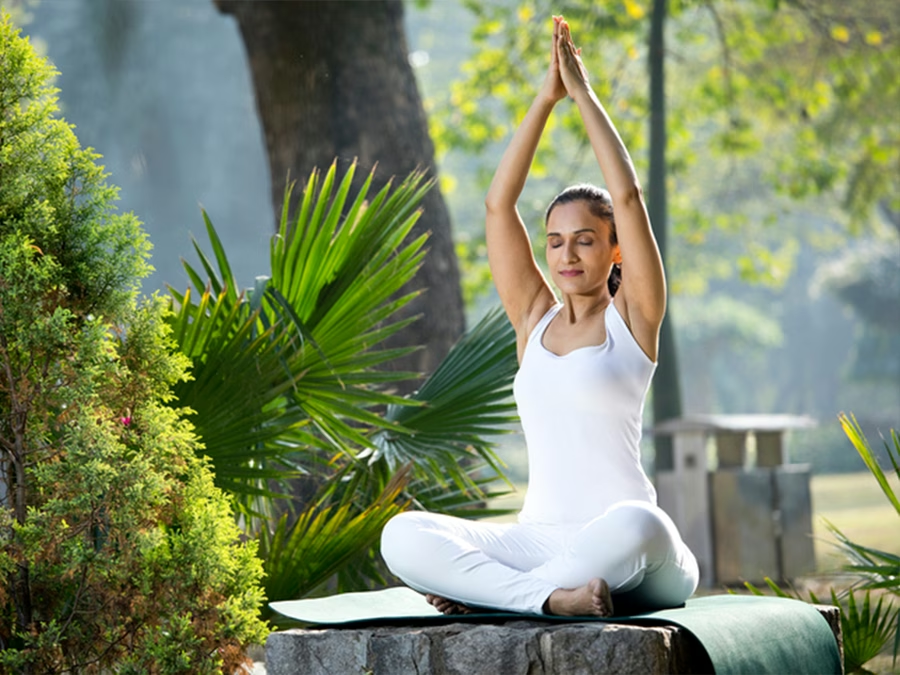
Modern life introduces a continuous stream of demands, deadlines, and digital distractions that keep the human body in a near-constant state of alertness. When stress becomes chronic, the body remains locked in a fight-or-flight response, flooding the bloodstream with cortisol and adrenaline. Over time, this biological overload leads to muscular tension, digestive issues, sleep disruptions, and mental fatigue.
Yoga offers a time-tested, science-backed approach to resetting the nervous system. Rather than treating physical tension and mental anxiety as separate issues, yoga integrates movement, controlled breath, and mindful presence to quiet the mind and soothe the body. By engaging in targeted yoga poses, you can consciously downregulate your nervous system and cultivate long-term emotional resilience.
Understanding the Connection Between Yoga and Stress Relief
To appreciate why yoga is so effective for stress relief, it helps to understand how stress affects human physiology. When you encounter a stressor, your sympathetic nervous system triggers physiological shifts, such as an elevated heart rate, shallow breathing, and muscular contraction. This response is designed for short-term survival, but persistent daily stressors keep this system continuously active.
Yoga interrupts this cycle by activating the parasympathetic nervous system, often referred to as the rest-and-digest mode. Through slow, deliberate physical postures and conscious breathing, yoga stimulates the vagus nerve, which runs from the brainstem down through the abdomen. Vagal stimulation signals to the heart to slow down, lowers blood pressure, and prompts muscles to release stored tension.
The mental focus required during a yoga session also acts as a form of active meditation. By concentrating on breath alignment and bodily sensations, you anchor your awareness in the present moment, breaking the cycle of repetitive, anxious thoughts that drive psychological stress.
Essential Yoga Poses for Stress Relief
Certain yoga postures are uniquely effective at downregulating the nervous system. The following essential poses focus on grounding the body, opening areas that store stress, and encouraging deep, restorative breathing.
Child Pose (Balasana)
Child Pose is a foundational resting posture that creates an immediate sense of safety and grounding. By turning the body inward and resting the forehead on the floor, you reduce sensory input and soothe an overstimulated mind.
-
Target Areas: Lower back, hips, thighs, and ankles.
-
How to Perform: Begin on your hands and knees. Bring your big toes together and widen your knees toward the edges of your mat. Sit your hips back toward your heels and extend your arms forward, resting your palms and forehead gently on the ground.
-
Stress Management Focus: As your abdomen rests against or between your thighs, breathe deeply into your back ribs. Feel your lower back expand with each inhalation and sink deeper toward the floor with each exhalation. Hold this pose for 1 to 3 minutes to quiet mental chatter.
Legs Up the Wall Pose (Viparita Karani)
Legs Up the Wall is a gentle inversion that requires minimal physical exertion while offering profound physiological benefits. Reversing the effects of gravity encourages venous blood return to the heart and shifts blood pressure regulation in a way that rapidly calms the central nervous system.
-
Target Areas: Hamstrings, lower back, and feet.
-
How to Perform: Sit sideways next to an open wall. Gently swing your legs up against the wall as you swing your torso back to lie flat on the floor. Slide your hips as close to the wall as is comfortable. Extend your arms out to the sides with palms facing upward.
-
Stress Management Focus: Close your eyes and focus on breathing slowly into your belly. This posture is particularly beneficial at the end of a demanding day, as it reduces physical swelling in the lower limbs while inducing a state of deep relaxation. Remain in the position for 5 to 10 minutes.
Cat Cow Pose (Marjaryasana Bitilasana)
This gentle, dynamic flow coordinates breath with movement to release physical rigidity along the spine. Many people store emotional stress in the neck, upper back, and shoulders, leading to restricted breathing patterns.
-
Target Areas: Spine, neck, chest, and abdomen.
-
How to Perform: Start in a tabletop position on your hands and knees, with wrists directly under your shoulders and knees under your hips. As you inhale, arch your back, lower your belly toward the floor, and lift your chest and tailbone (Cow Pose). As you exhale, round your spine toward the ceiling, tuck your chin toward your chest, and pull your belly button inward (Cat Pose).
-
Stress Management Focus: Move slowly through this sequence for 8 to 10 breath cycles. Match the speed of your movement to the natural cadence of your breath. This rhythmic coordination creates a meditative state that eases spinal stiffness and releases somatic tension.
Standing Forward Fold (Uttanasana)
Standing Forward Fold brings the head below the heart, which encourages increased blood flow to the brain and exerts a calming influence on the mind. It also stretches the entire posterior chain of the body, releasing physical tightness caused by prolonged sitting.
-
Target Areas: Hamstrings, calves, hips, and lower back.
-
How to Perform: Stand tall with feet hip-width apart. Inhale to lengthen your spine, then hinge at your hips to fold your torso forward on an exhalation. Allow your head and arms to hang heavy toward the floor, or hold opposite elbows with your hands. Keep a generous bend in your knees to protect your lower back.
-
Stress Management Focus: Let gravity do the work of lengthening your spine. With every exhale, imagine releasing mental pressure out through the crown of your head. Stay in this pose for 45 to 60 seconds, breathing deeply into the back of your lungs.
Bridge Pose (Setu Bandha Sarvangasana)
Stress often causes people to hunch their shoulders and collapse the chest forward, which restricts full diaphragm expansion. Bridge Pose is a supported heart opener that counteracts this defensive posture by expanding the chest and encouraging fuller, deeper breaths.
-
Target Areas: Chest, neck, spine, and hip flexors.
-
How to Perform: Lie on your back with knees bent and feet flat on the floor, hip-width apart. Keep your arms alongside your body with palms facing down. Press down through your feet to lift your hips toward the ceiling. Interlace your fingers underneath your back and roll your shoulders beneath you to open your chest.
-
Stress Management Focus: Press your upper arms into the mat to create space across your collarbones. Focus on deep diaphragmatic breathing, feeling your chest expand with energy while keeping your neck soft and relaxed. Hold for 30 to 60 seconds.
Corpse Pose (Savasana)
Corpse Pose is often considered the most important posture in a stress-relief yoga practice. It provides the body and mind with an opportunity to integrate the physical benefits of movement while resting in complete stillness.
-
Target Areas: Entire body and central nervous system.
-
How to Perform: Lie completely flat on your back with your legs extended comfortable distance apart. Allow your feet to fall open naturally. Place your arms alongside your torso with your palms facing up. Close your eyes and release all conscious control over your breath.
-
Stress Management Focus: Perform a mental body scan, systematically releasing tension from your jaw, forehead, shoulders, and limbs. Allow your body to feel heavy against the floor. Remain in this state of conscious rest for 5 to 10 minutes.
Best Practices for a Stress Relieving Yoga Practice
To maximize the mental and physical benefits of your yoga practice, consider incorporating the following guidelines into your routine.
-
Focus on the Breath: Your breath serves as an indicator of your internal state. If your breathing becomes short or jagged, scale back the intensity of the pose. Aim for smooth, even inhalations and exhalations through the nose.
-
Create a Calm Environment: Designate a quiet space free from digital notifications, loud noises, and immediate interruptions. Dimming the lights or using soft lighting can help cue your nervous system that it is time to unwind.
-
Emphasize Consistency Over Duration: Practicing yoga for 10 to 15 minutes daily is far more effective for managing stress than doing an intense 90-minute session once every few weeks. Regular practice reinforces healthy neural pathways.
-
Use Props Generously: Yoga props such as blocks, bolsters, and blankets eliminate unnecessary physical strain, allowing your body to rest fully in restorative shapes without forcing flexibility.
Frequently Asked Questions
How long should I hold each pose to feel stress relief?
For stress management and nervous system regulation, holding postures for 1 to 3 minutes is generally ideal. Restorative poses like Legs Up the Wall or Child Pose can be held for 5 to 10 minutes. Holding poses longer allows your muscles to disengage fully and gives your parasympathetic nervous system sufficient time to initiate a relaxation response.
Is morning or evening yoga better for managing chronic stress?
Both morning and evening practice offer distinct benefits depending on your goals. Morning yoga helps release physical stiffness accumulated overnight and establishes a calm, focused mindset for the day ahead. Evening yoga helps process the psychological stress accumulated throughout the workday and prepares the body for restful, high-quality sleep. Choose the time of day that best fits your schedule consistently.
Can yoga replace medical treatment for severe clinical anxiety or depression?
Yoga is a powerful complementary practice that supports overall mental well-being, but it is not a direct substitute for medical evaluation, psychotherapy, or prescribed psychiatric medication. Individuals experiencing clinical anxiety or depression should use yoga alongside professional healthcare guidance as part of a comprehensive wellness plan.
What should I do if my mind wanders constantly during yoga practice?
Mind wandering is a natural function of the brain and should not be viewed as a failure. When you notice your thoughts drifting to daily worries or to-do lists, simply acknowledge the thought without judgment and gently redirect your attention back to the physical sensations of your body or the rhythm of your breath.
Do I need to be flexible to practice yoga for stress reduction?
Flexibility is not a prerequisite for yoga, especially when the goal is stress reduction. Yoga for stress relief focuses on nervous system regulation and physical comfort rather than achieving deep stretches or complex shapes. Modifying poses with bent knees or using props ensures that anyone, regardless of flexibility, can access the calming benefits of the practice.
Are there specific yoga poses I should avoid when feeling extremely anxious?
When experiencing acute anxiety, strong backbends or intense, fast-paced sequences can sometimes feel overstimulating and increase your heart rate further. Instead, avoid rapid movements and focus on grounding poses that keep you close to the floor, such as Child Pose, Standing Forward Fold, or Legs Up the Wall, paired with slow exhalations.
How quickly can someone expect to feel calmer after a yoga session?
Many individuals experience an immediate reduction in muscle tension and a sense of mental clarity right after a single 15-minute yoga session. However, the cumulative benefits of stress management, such as improved emotional regulation and lower baseline anxiety, typically develop after several weeks of consistent, regular practice.